View and manage emails
Manage your sent emails
Section titled “Manage your sent emails”After you've sent or scheduled your first email, your emails appear in the Emails Dashboard page. You can view email details, share a public version, view email logs, and more.
You can also manage your scheduled and sent emails using Resend's code tools including the MCP server, API endpoints and CLI commands for tasks such as listing, sending, updating, and canceling emails.
View email details
Section titled “View email details”See all the metadata associated with a sent or scheduled email, including the sender address, recipient address, subject, and more from the Emails Dashboard page. Select any email to view its details.
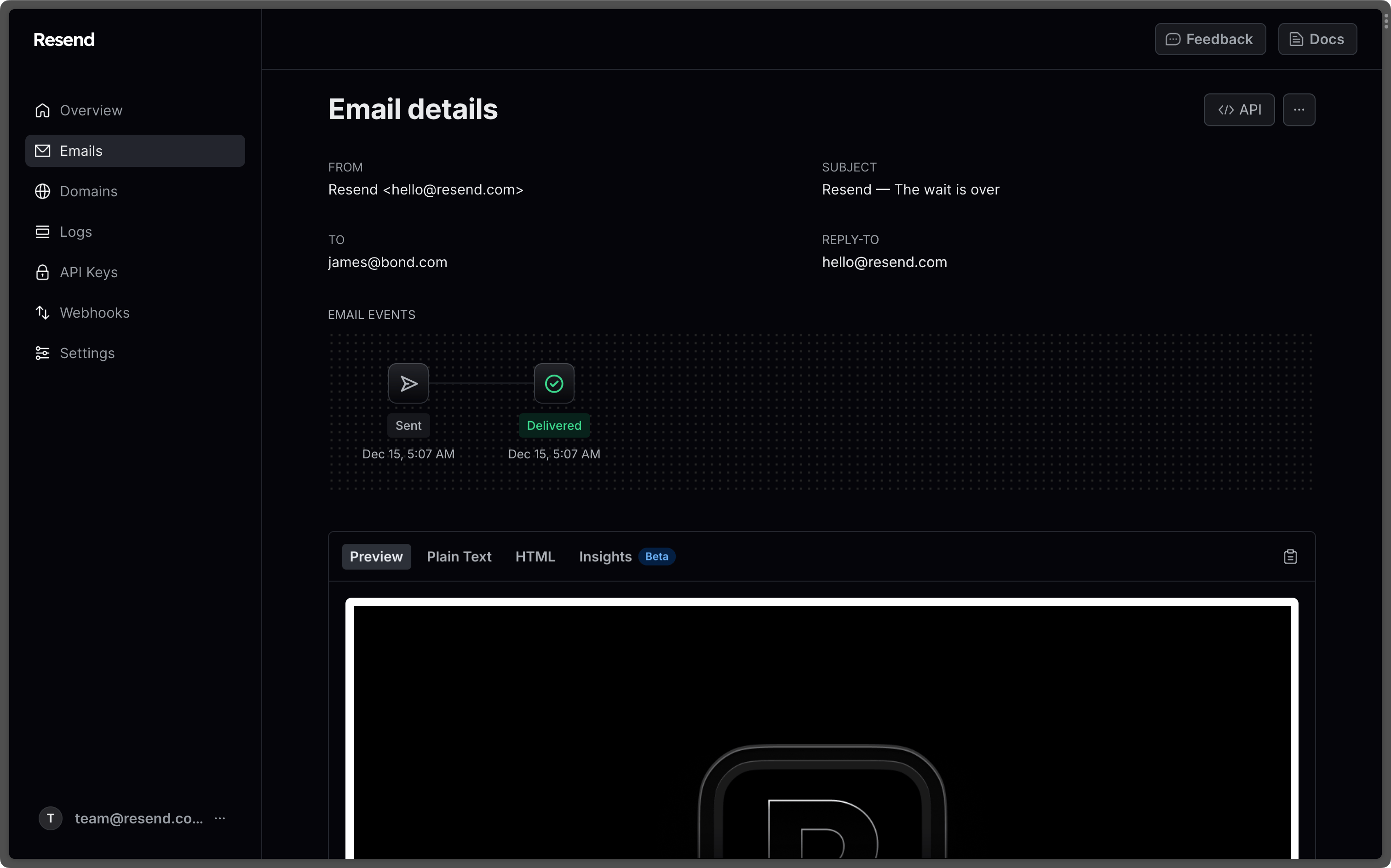
Each email contains a Preview, Plain Text, and HTML version to visualize the content of your sent email in its various formats.
Understand email events
Section titled “Understand email events”Here are all the events that can be associated with an email:
bounced- The recipient's mail server rejected the email. (Learn more about bounced emails)canceled- The scheduled email was canceled (by user).clicked- The recipient clicked on a link in the email.complained- The email was successfully delivered to the recipient's mail server, but the recipient marked it as spam.delivered- Resend successfully delivered the email to the recipient's mail server.delivery_delayed- The email couldn't be delivered to the recipient's mail server because a temporary issue occurred. Delivery delays can occur, for example, when the recipient's inbox is full, or when the receiving email server experiences a transient issue.failed- The email failed to be sent.opened- The recipient opened the email. (Open rates are not always accurate)queued- The email created from Broadcasts or Batches is queued for delivery.scheduled- The email is scheduled for delivery.sent- The email was sent successfully.suppressed- The email was not sent because the recipient is on the suppression list. (Learn more about the suppression list)
Share email link
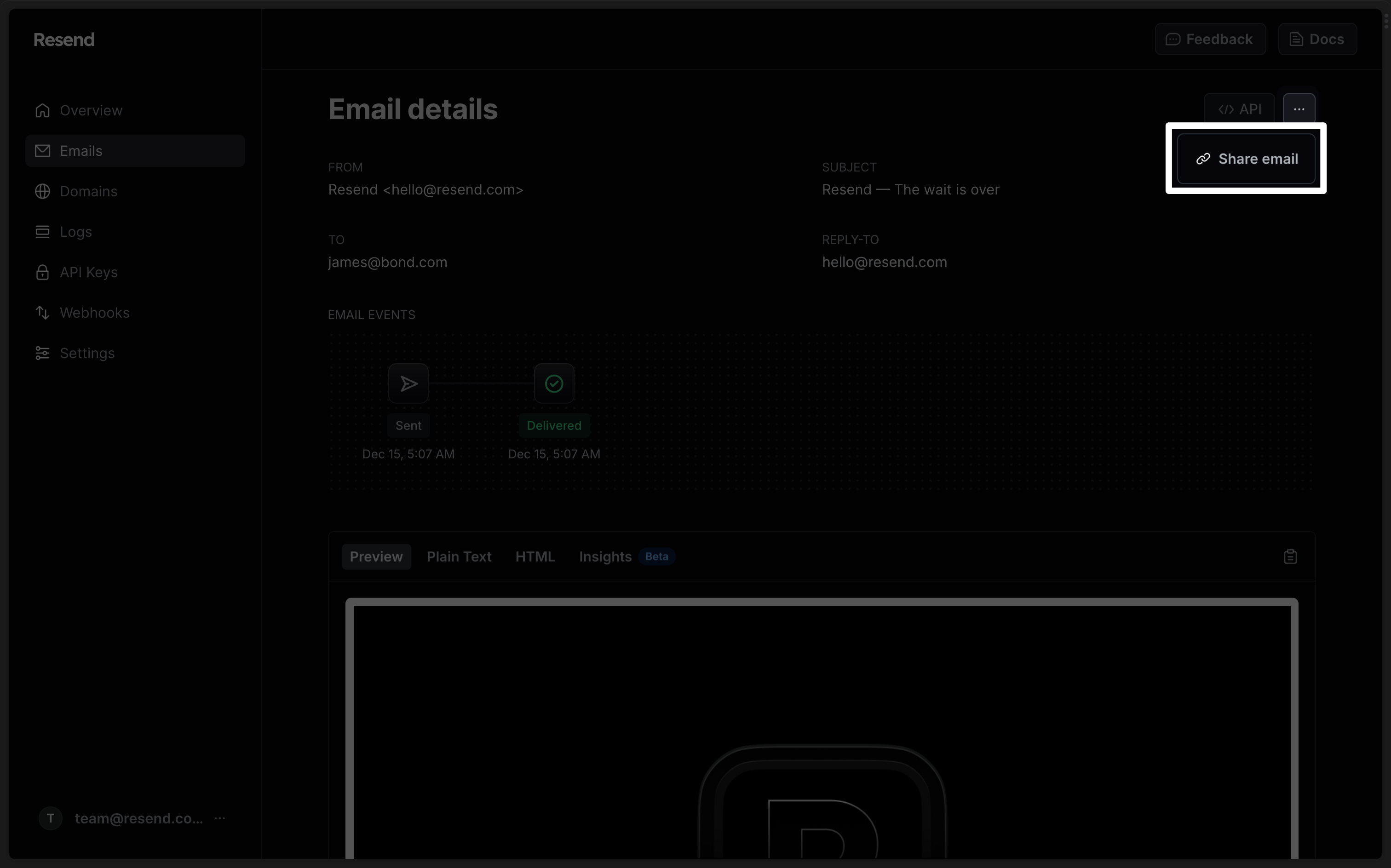
Section titled “Share email link”You can share a public link of a sent email, which is valid for 48 hours. Anyone with the link can view the email.
To share a link, click on the dropdown menu , and select Share email.
Copy the URL and share it with your team members.
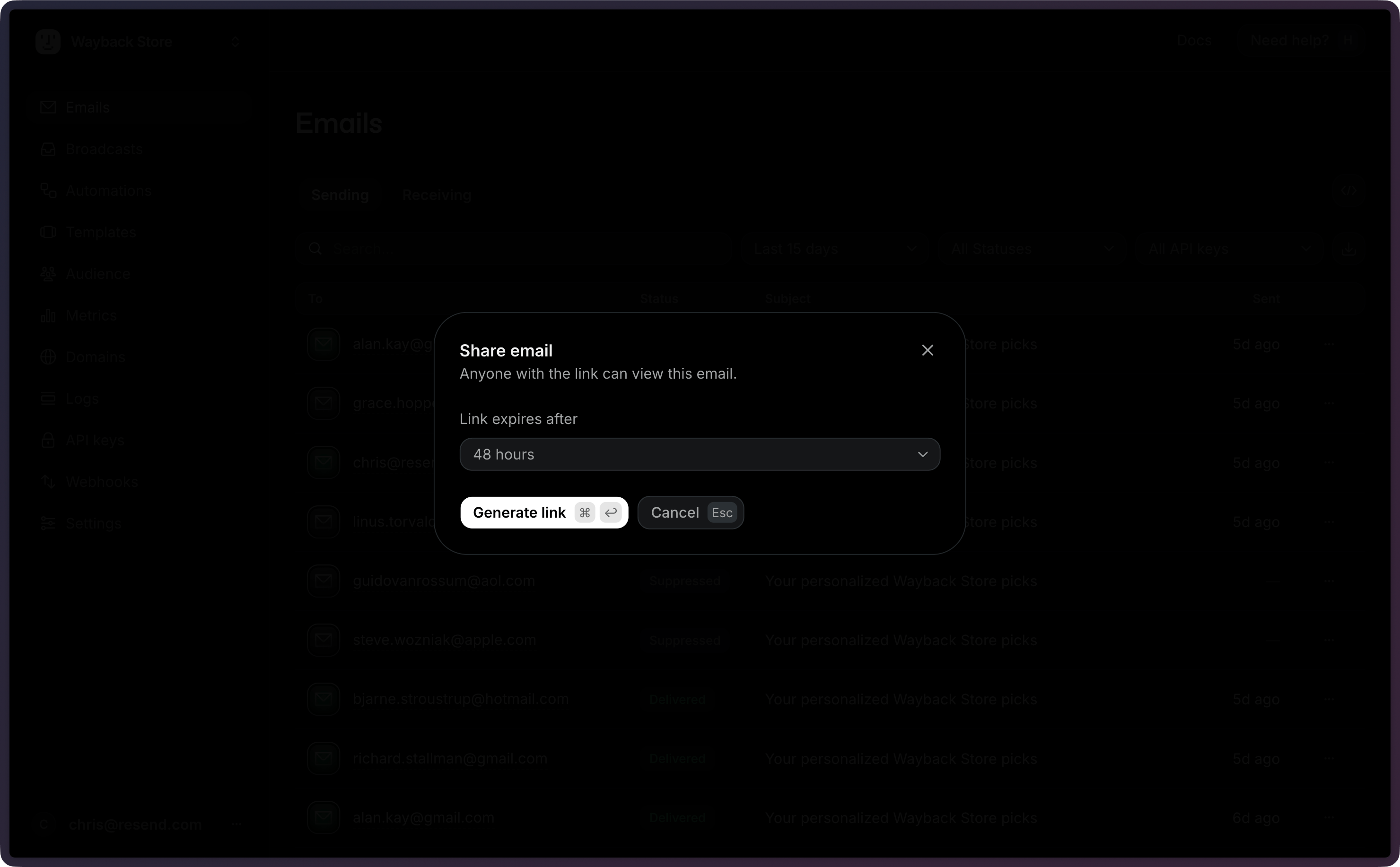
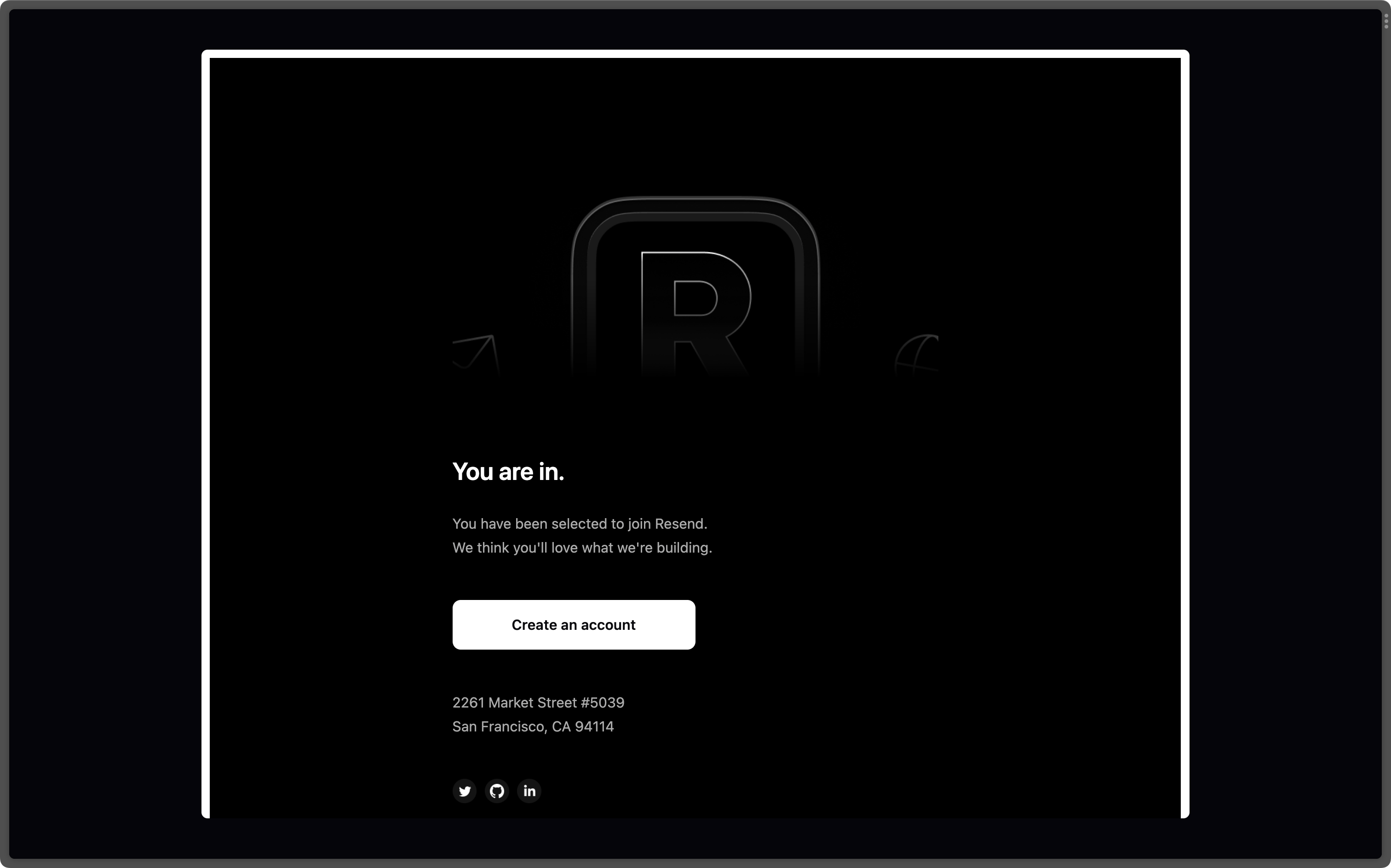
Anyone with the link can view the email without authenticating for 48 hours.
You can also create share links programmatically using the Share Email API.
See associated logs
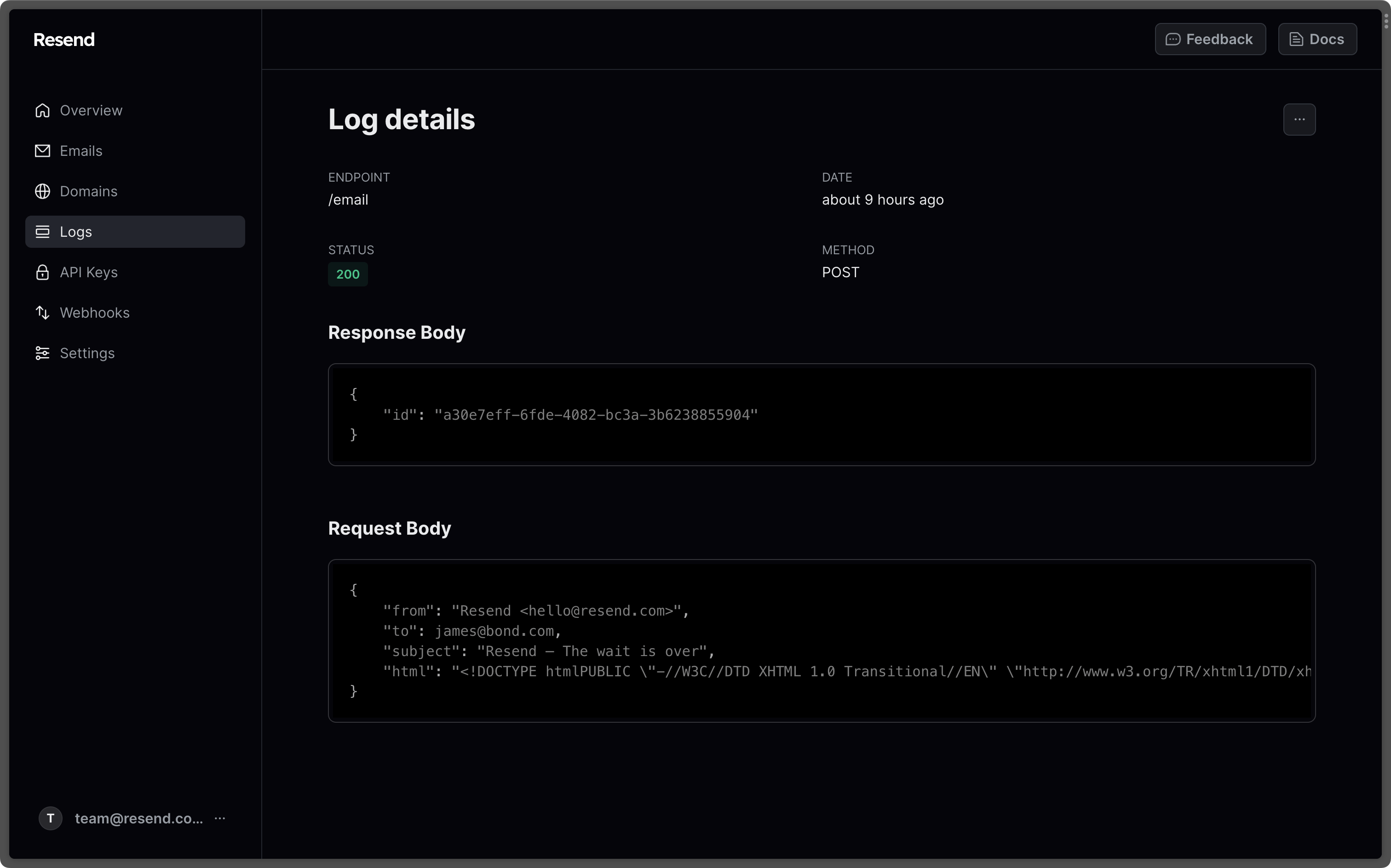
Section titled “See associated logs”Check all the logs associated with an email to help you troubleshoot any issues with the request itself.
To view the logs, click on the dropdown menu, and select "View log".
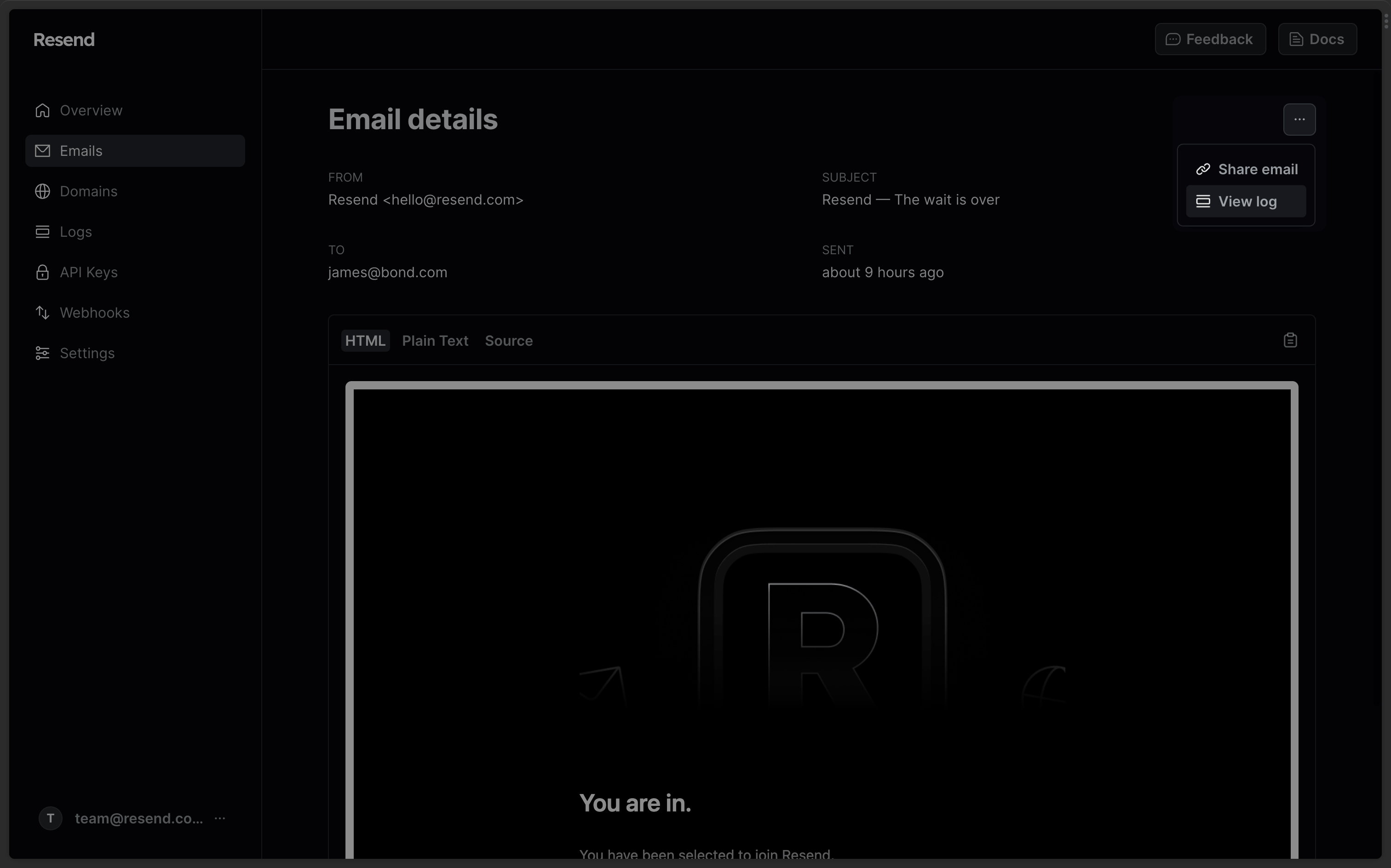
This will take you to logs, where you can see all the logs associated with the email.
Export your data
Section titled “Export your data”Admins can download your data in CSV format for the following resources:
- Emails
- Broadcasts
- Contacts
- Segments
- Domains
- Logs
- API keys
To start, apply filters to your data and click on the "Export" button. Confirm your filters before exporting your data.
If your exported data includes 1,000 items or less, the export will download immediately. For larger exports, you'll receive an email with a link to download your data.
All admins on your team can securely access the export for 7 days. Unavailable exports are marked as "Expired."
API Reference
Section titled “API Reference”For complete API documentation, see the Sending API reference.